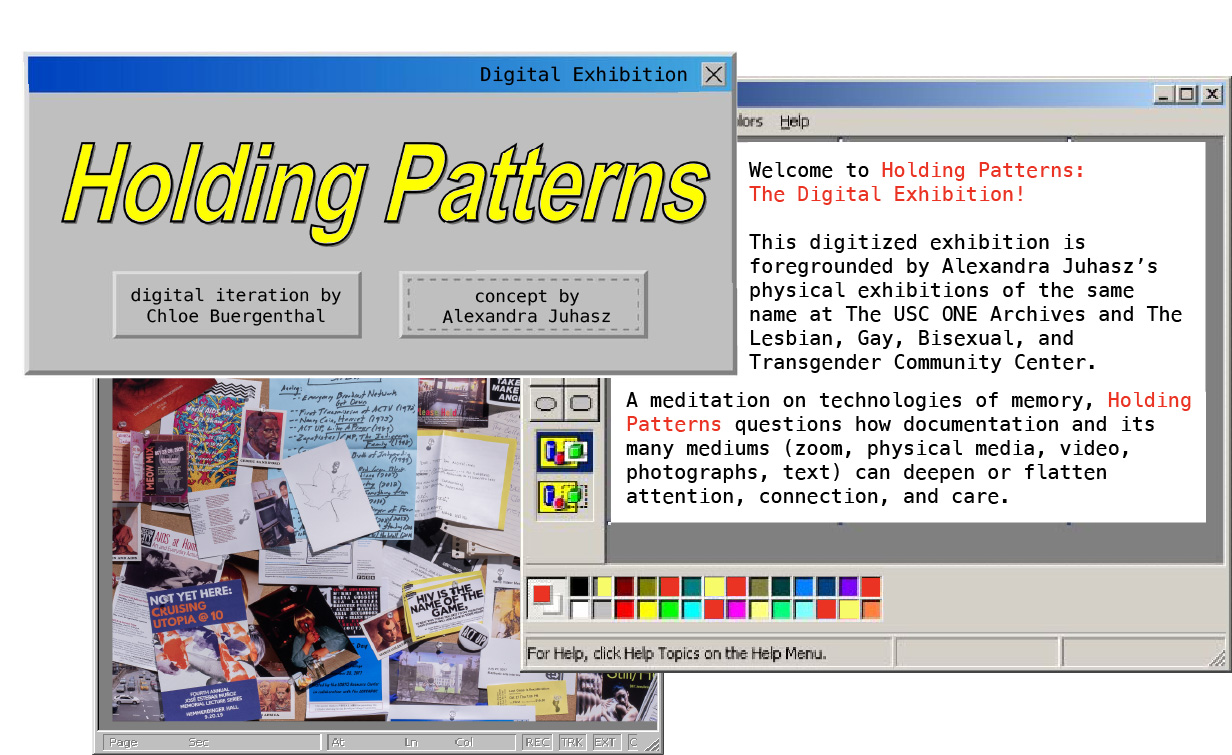
This iteration has been compiled, authored, and designed by Chloe Buergenthal, co-creator of the learning guide used at Holding Patterns installations at both the USC ONE Archives in Los Angeles, California and The Lesbian, Gay, Bisexual, Transgender Community Center in New York, New York.
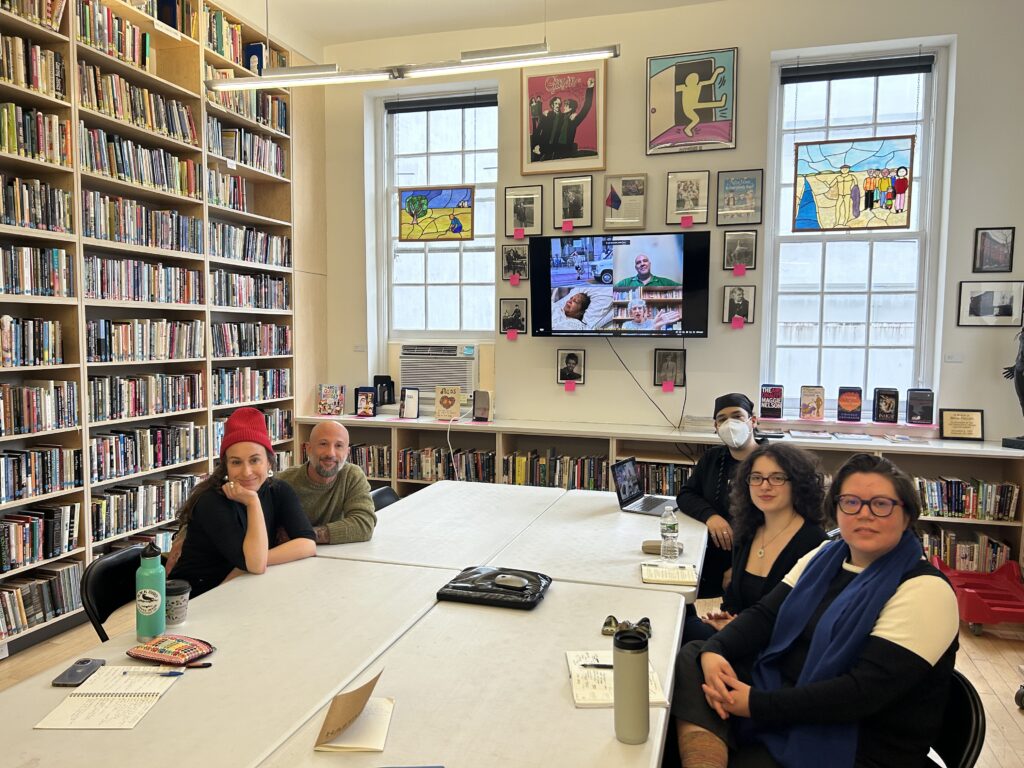
A meditation on technologies of memory, with close attention paid to medium specificity, the exhibition comprises four hour-long interviews and their paper transcripts—remarkable conversations between friends and “AIDS workers”—two death-bed/legacy videos shot by Alexandra Juhasz on her friends’ request (in the 1990s and 2020s), as well as some of the things and photos shared in the process of remembering, celebrating, and fighting inside queer communities of care. Additional exhibition materials include objects of loved ones no longer with us, such as James Robert Lamb (1963-1993)’s sweater and Bryn Kelly (1980-2016)’s scarf, as well as visitor activations exploring themes of grief’s physicality, walking or mapping as archival practice, and research-based learning.
As you view these materials, consider how your experience may be altered by the device you are using and the digital realm in which it sits. How can technology change grief? Our connection to each other and the past? What does it mean to engage with a digital exhibition that has existed physically? One that is malleable and different in each setting, ever-changing from iteration to iteration?
There are three sections to this iteration (Technology as Memory: Videos & Images, Material Engagement: Objects as Relics, and Further Learning), modeled after those which took place at The Center, the USC ONE Archives, and the learning guide.
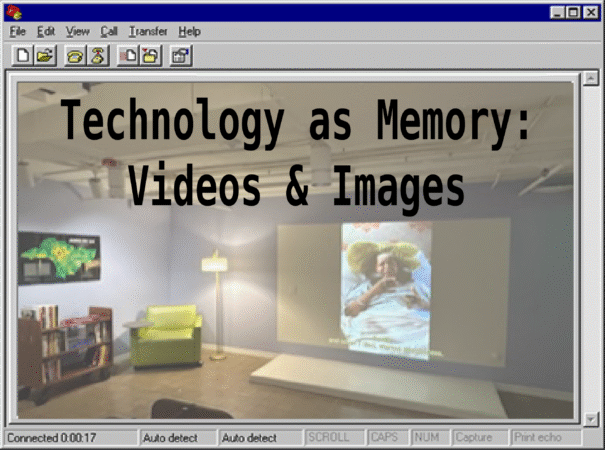
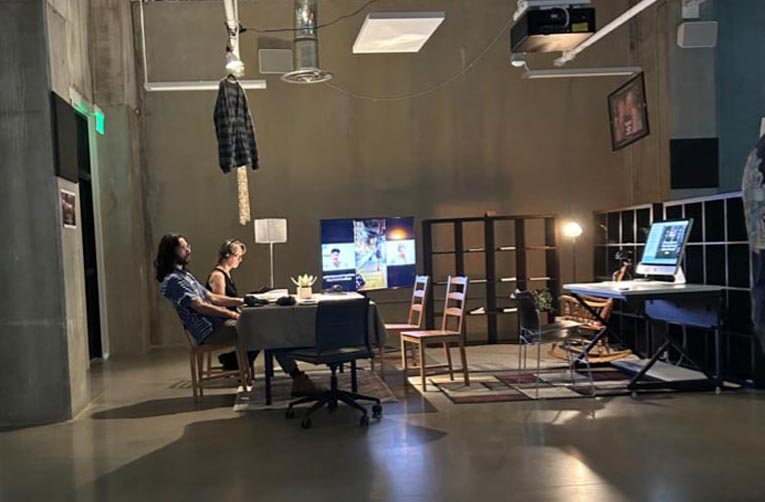
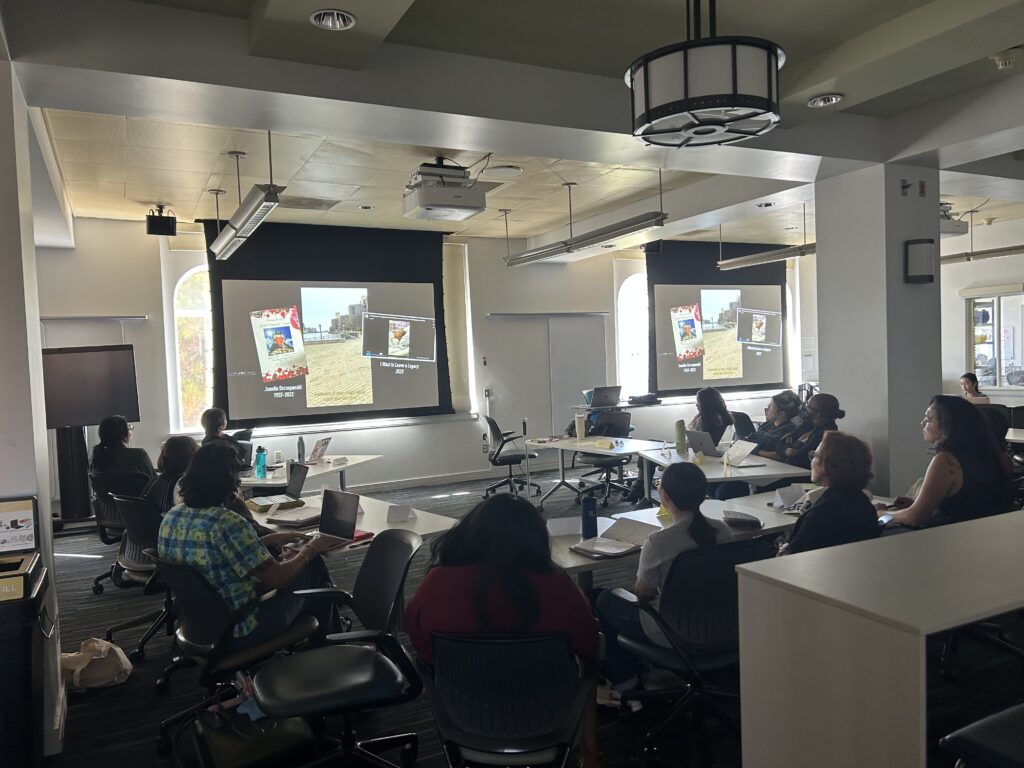
The following legacy videos include that of Jim (James) Robert Lamb, a gay white male downtown performer who died painfully before there were meds at 29 in 1993 and Juanita Mohammed Szczepanski, a Black disabled queer feminist media activist who died in 2022 on her own terms, in her sixties, and due largely to inequities in the American healthcare system and COVID in addition to their cherished effects.
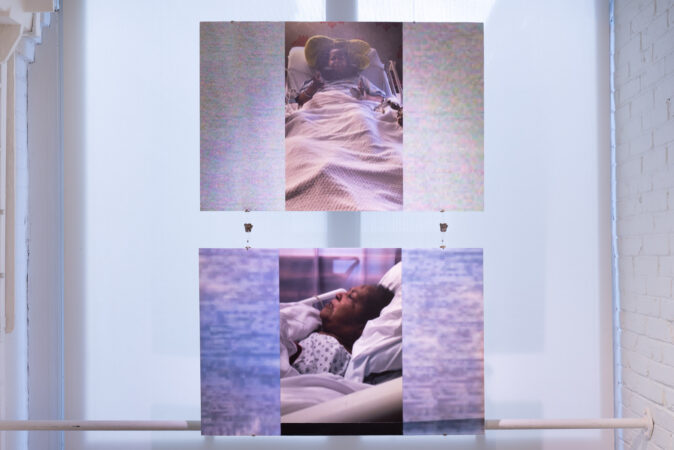
Stills of I Want to Leave a Legacy “The Video/Activism of Juanita M. Szczepanski,” by Juanita Mohammed Szczepanski, 2022 from The Centers’ install.
Stills from Video Remains: Experimental Documentary
by Alexandra Juhasz, 2005 at The Center.
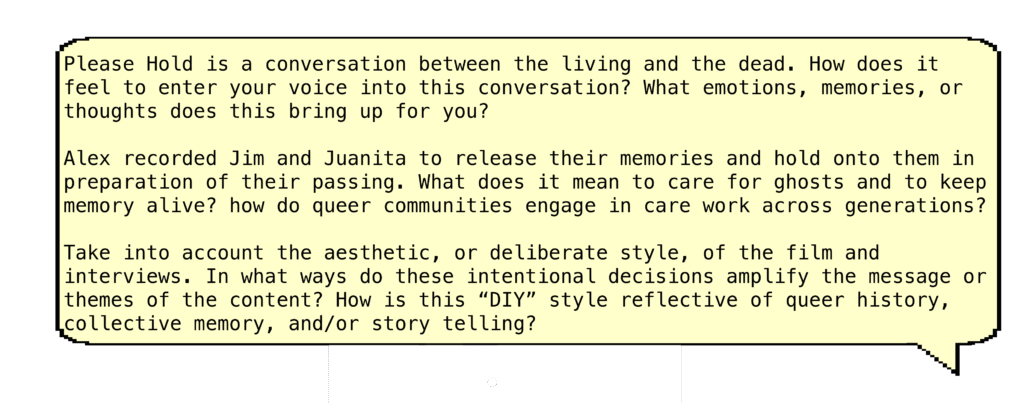
In Summer 2023, Alexandra Juhasz began production on a personal, DIY video, Please Hold. As research for her archival and legacy project, she shot four interviews with fellow “AIDS workers” on Zoom: Jih-Fei Cheng, Marty Fink, Pato Hebert, and Ted Kerr. She asked them to consider their “AIDS work” with her in intimate and knowledgeable conversations.
As you view the videos and/or read their transcripts, we invite you to think about how you are engaging with the content—the sizes of the screens, the computer or device you are using, if you are alone or with others, how your headphones may or may not fit your ears—how has this impacted your experience? Your connection to Jim, Juanita, and the others? Transcripts for the interviews are available here.

by Alexandra Juhasz, 2005
In 1993, Alex shoots an interview with her best friend Jim as he tries to recount his life as he is dying. In 2004, she re-works this haunting video, playing it in real-time but letting bleed in a host of present day interviewees who also reflect upon AIDS, death, activism, and video.

by Juanita Mohammed Szczepanski, 2022
Juanita Mohammed Szczepanski (1957–2022) was a prolific AIDS activist videomaker. This is her final work, made in collaboration with friend and longtime collaborator, Alexandra Juhasz.

Interview with Alexandra Juhasz, August 7, 2023
Dr. Jih-Fei Cheng is Associate Professor of Feminist, Gender, and Sexuality Studies at Scripps College. He is co-editor with Alexandra Juhasz and Nishant Shahani of AIDS and the Distribution of Crises (Duke UP 2020).

Interview with Alexandra Juhasz, August 4, 2023
Pato Hebert is an artist, teacher, and organizer. His work probes the challenges and possibilities of interconnectedness. He has worked in HIV initiatives with queer communities of color since 1994.


Interview with Alexandra Juhasz, August 14, 2023
Theodore (Ted) Kerr is an educator, writer, and organizer. He is the co-author of We Are Having This Conversation Now: The Times of AIDS Cultural Production (Duke University Press, 2022, with Alexandra Juhasz).
Interview with Alexandra Juhasz, August 25, 2023
Dr. Marty Fink is an associate professor at Toronto Metropolitan University. Fink is the author of Forget Burial: HIV Kinship, Disability, and Queer/Trans Narratives of Care (Rutgers UP; Lambda finalist in LGBTQ non-fiction, 2020).
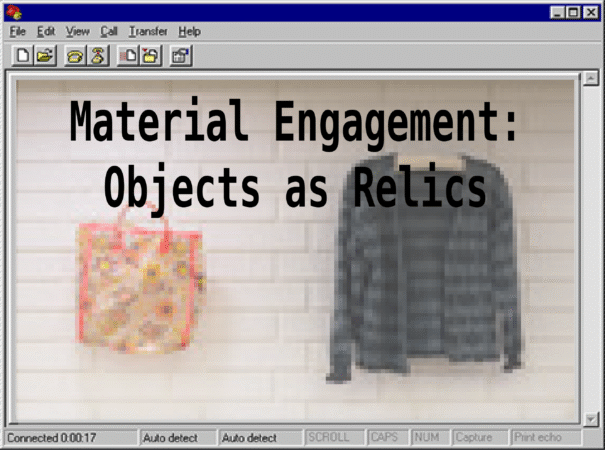
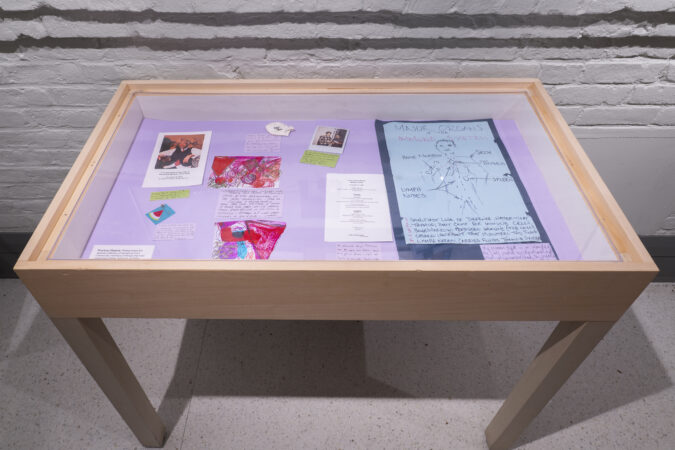
Holding Patterns includes objects left behind by loved ones, including James (Jim) Robert Lamb (1963-1993)’s cardigan, one of Alexandra (Alex) Juhasz’s most cherished keepsakes, and Bryn Kelly‘s (1980-2016) scarf, which has been held by her friend Elizabeth Koke since her death. Alex first met Jim while he was wearing the sweater during a trip to San Francisco in 1984. He had blown all his spending money to buy it. Bryn and Elizabeth enjoyed nightlife together, often wearing leopard print. Visitors were also encouraged to bring objects left behind by ghosts for vitrines at both exhibitions.
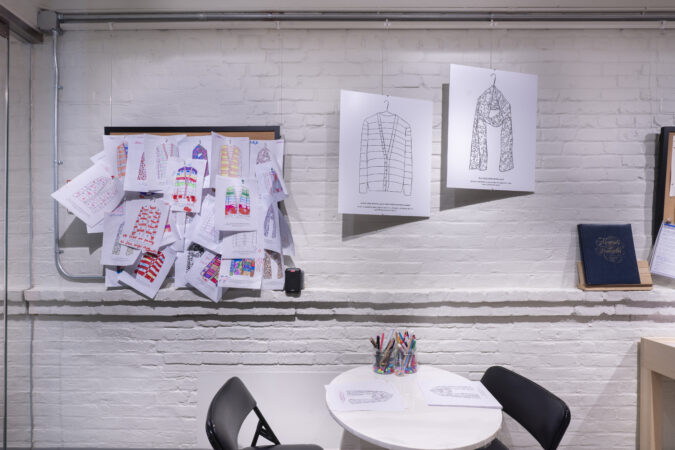
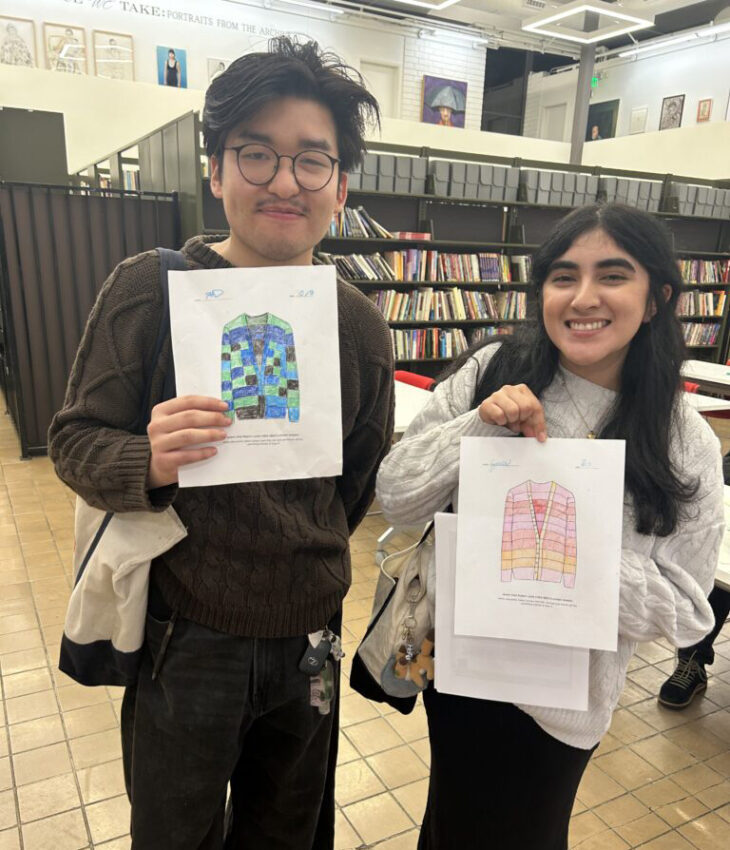
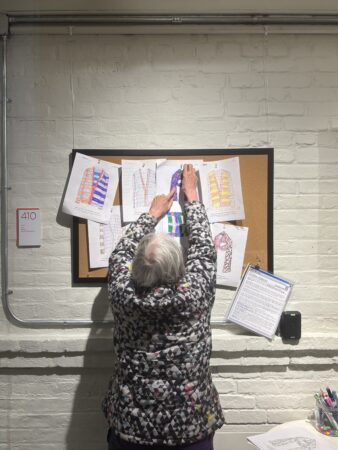
Both the physical scarf and sweater stayed in Los Angeles at the USC ONE Archives during the concurrent exhibitions. Coloring sheets of Jim’s sweater and Elizabeth’s scarf were provided to visitors, allowing them to give shape and color to their grief while decorating the exhibition at The Center in New York.
We encourage you to do the same wherever you may be in this moment. Download or print out your own coloring sheets here. Think of colors or patterns that resonate with you. Draw in or outside the lines. Use this exercise as a meditative practice to channel ghosts and grief through your hands. Hold space for your mind to wander. Consider adding a photo or digital file of your finished work here to become part of the exhibition and to view other visitors’ contributions.
These materials help us visualize our grief and give shape to our remembrance.
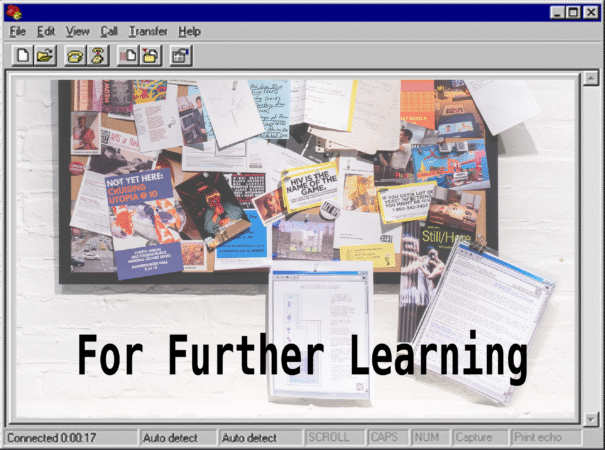
Additional materials compiled for Holding Patterns include a reading list that invites exploration regarding how memories are preserved and how lives are shaped through illness, kinship, care, and shared experiences of grief. We live through and with each other, making sense of our shared tragedies and their ongoing repercussions.
These readings trace the connections of and between birth, loss, illness, medicine, community-building, and grief. bringing together works on chronic illness, the politics of care, Queer Liberation, public memory, and community building, the reading list provides further information on themes and topics throughout Holding Patterns and Please Hold.
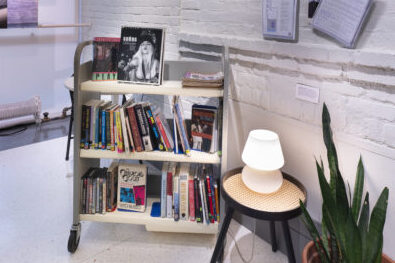
At the in-person exhibitions, these materials were available both in print and digitally through prepared research stations.
Further exhibition activations include curated queer walking maps of the West Village (New York) and Los Angeles (California). Using mapping and walking as practice, we encourage you to trace your past selves.
As we walk, our bodies recognize the moments when we felt seen, safe, or connected. We encounter the ghosts of who we once were in those places. For many of us, New York and Los Angeles are introductions to questions we never dared to ask ourselves. Along the way, we create a second family, one we were not born into. Our lives are shaped by the streets of different neighborhoods and the chosen families we become part of. These maps trace a history of queerness through places where many of us have first felt safe. We invite you to add your own memories and reflections, wherever they may be located, and recognize the past versions of yourself that continue to haunt the places that have shaped us and our communities. Contribute sites of your own to our archival memory map here.
Please Hold can be requested here to screen for free. Additional installation information can be seen here.
The full learning guide (co-created by Chloe Buergenthal and Shwe Ye Shoon Myat) can be accessed here.